
Choosing the right air conditioning solution for your commercial space is crucial for maintaining employee comfort, customer satisfaction, and managing energy costs effectively. The best system depends on your building size, layout, cooling requirements, and budget, but with the right guidance, you can find the perfect solution.
For most small to medium commercial buildings, split or multi-split systems offer excellent value and flexibility. Larger buildings with multiple zones benefit from VRF systems for superior energy efficiency. Large open-plan spaces work best with ducted central systems for consistent whole-building cooling.
At Mechcool, we’ve been installing and maintaining commercial air conditioning systems across Sussex and Surrey for over a decade. In this guide, we’ll explain the different types available and help you determine which suits your business best.
Understanding Commercial Air Conditioning Systems
Commercial air conditioning differs significantly from residential systems. These units are designed to handle larger spaces, higher occupancy levels, and more demanding cooling requirements while maintaining energy efficiency and reliability.
Types of commercial air conditioning units
Split and multi split systems
Split systems are among the most popular choices for commercial spaces in the UK. These consist of an outdoor condensing unit connected to one or more indoor units, providing efficient heating and cooling without extensive ductwork.
How They Work: The outdoor unit contains the compressor and condenser, while indoor units distribute conditioned air. Refrigerant lines connect these components, transferring heat between them. Multi-split systems allow multiple indoor units to connect to a single outdoor unit.
Best For:
- Small to medium offices
- Retail stores and boutiques
- Restaurants and cafes
- Server rooms
- Buildings without existing ductwork
- Spaces requiring independent zone control
VRF systems
Variable refrigerant flow systems represent advanced commercial air conditioning technology, offering exceptional flexibility and efficiency for medium to large buildings. Also known as VRV, these systems precisely control refrigerant delivery to each indoor unit, with quiet operation.
How They Work: A single outdoor unit connects to numerous indoor units, with the system continuously adjusting refrigerant flow based on each zone’s specific cooling or heating demands. Heat recovery VRF systems can simultaneously provide heating and cooling to different areas.
Best For:
- Multi-floor office buildings
- Hotels and hospitality venues
- Large retail spaces
- Mixed-use commercial properties
- Healthcare and educational facilities
Ducted systems
Ducted systems distribute cooled air throughout buildings via concealed ductwork and vents. These traditional systems remain popular for large commercial spaces requiring uniform temperatures.
How They Work: A central air handling unit processes and conditions air, distributing it through insulated ductwork to outlets throughout the building. Return air grilles collect air back to the system for reconditioning.
Best For:
- Large open-plan offices
- Warehouses and industrial facilities
- Shopping centres
- Conference centres
How to choose the best HVAC system for your business
By Building Size and Layout
Small Spaces: Small offices, boutiques, cafes
Single split systems offer the most cost-effective solution with quick installation and individual control, perfect for spaces with one or two main areas.
Medium-sized buildings: Multi-room offices, retail stores, restaurants
Multi-split systems work best, connecting multiple indoor units to one outdoor unit. This provides different temperatures for different rooms while maintaining a cleaner external appearance than multiple single splits.
Large Commercial Spaces: Large offices, showrooms, gyms
VRF or ducted systems are ideal. VRF excels in spaces with varied usage and occupancy, while ducted systems suit open-plan areas requiring uniform temperatures. Both integrate well with building management systems.
Very Large Commercial Units: Warehouses, manufacturing facilities, shopping centres
Central ducted or chiller systems provide high-capacity cooling for expansive areas. Multiple system types may be combined for different zones.
By Business Type
Offices: Modern offices need comfortable temperatures for productivity. Small offices benefit from multi-split systems, medium offices from VRF for flexible zoning, and large offices from VRF or ducted systems. Meeting rooms often need independent control as they warm quickly with occupancy.
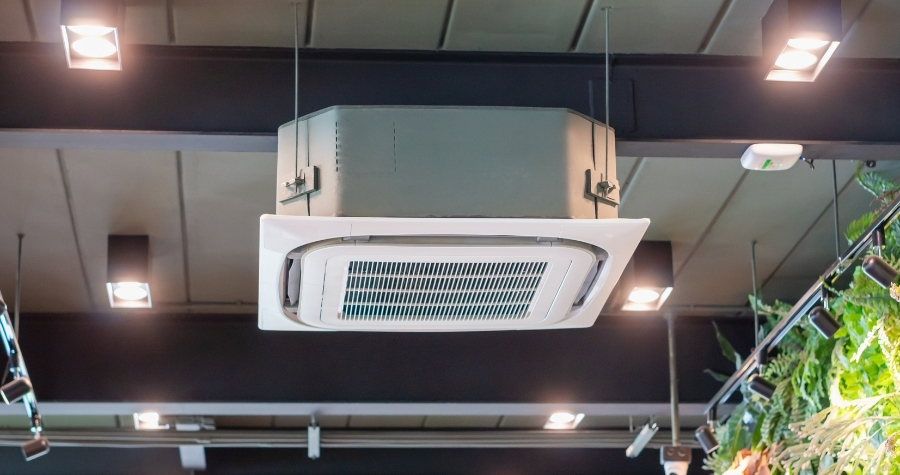
Retail: Retail environments must balance customer comfort with frequent door openings. Small shops work well with wall-mounted splits positioned carefully, while larger retail spaces benefit from VRF with discreet ceiling cassette units. Showrooms often prefer ducted systems for clean aesthetics.
Restaurants and Hospitality: Kitchens generate significant heat requiring dedicated cooling, while dining areas need customer comfort. Multi-split systems suit small cafes, restaurants benefit from VRF with higher kitchen capacity, and hotels need VRF for individual room control with central monitoring.
Warehouses and Industrial: Large industrial spaces often use spot cooling for occupied areas rather than cooling entire volumes. Manufacturing facilities may need large-scale ducted systems, while mixed office/warehouse spaces require separate systems for different areas.
Healthcare: Medical facilities have strict air quality and temperature requirements. GP surgeries work well with multi-split systems; dental practices benefit from VRF with dedicated treatment room units; and clinics need medical-grade filtration with VRF or ducted systems that comply with healthcare ventilation standards.
Key Factors to Consider
Cooling Requirements
Different environments have varying needs:
- High heat load areas (server rooms, kitchens, gyms) need higher capacity systems
- Variable occupancy spaces (conference facilities, retail) benefit from systems that adjust capacity based on demand
- Multi-zone requirements (mixed-use buildings) need systems providing different temperatures simultaneously
Energy efficiency
When it comes to commercial air conditioners, energy efficiency is a crucial factor. To ensure optimal cooling without breaking the bank, you need an AC system that consumes less energy while delivering maximum performance.
Energy-efficient cooling solutions not only reduces your carbon footprint but also saves you money on utility bills. Consider the following benefits of energy-efficient AC systems:
- Reduced environmental impact
- Cost savings in the long run
- Improved indoor air quality
Installation cost
You should be aware of the installation cost involved in setting up a commercial ac system. The installation cost can vary depending on the type of system you choose for your business needs and the size of your commercial space.
Maintenance
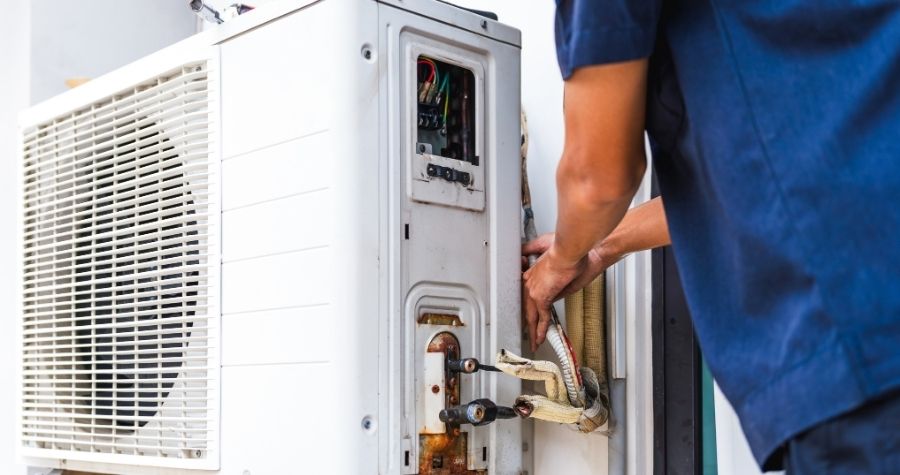
To ensure optimal performance, it’s important to regularly maintain your commercial AC system. Regular maintenance helps extend the lifespan of your system and reduce energy consumption.
Schedule professional inspections to identify and address any issues before they become major problems.
UK Regulations and Compliance
Commercial installations must comply with:
F-Gas Regulations: Installation and maintenance by F-Gas certified engineers, regular leak checks, proper refrigerant record-keeping, and correct disposal procedures.
Building Regulations: Part L covers energy efficiency standards and commissioning requirements. Part F addresses ventilation requirements, particularly for ducted systems.
Planning Permission: Most installations are permitted development, but listed buildings, conservation areas, and prominent external units may require permission.
Energy Performance: Commercial buildings need valid EPCs, with air conditioning efficiency impacting ratings.
Common Mistakes to Avoid
Choosing on Price Alone: Cheap systems often have poor efficiency and reliability. Consider total ownership costs over the system’s lifetime.
Incorrect Sizing: Undersized systems struggle and fail early. Oversized systems waste money and cause temperature swings. Always get professional heat load calculations.
Ignoring Future Needs: Plan for business growth. Expanding later costs significantly more than slight over-specification initially.
Neglecting Maintenance: Unmaintained systems cost substantially more to run and fail years earlier. Factor maintenance into your budget from day one.
Poor Installer Selection: Check credentials including F-Gas certification, manufacturer approvals, and insurance. Read reviews and request references.
Air conditioning brands
There are a wide range of air conditioner brands on the market, each offering a different solution. At Mechcool, we only work with leading air conditioning manufacturers known for reliability and performance, including:
- Daikin
- Mitsubishi Electric
- Panasonic
- Samsung
- MHI
All these brands produce excellent equipment. Your choice depends on specific requirements, budget, aesthetic preferences, and integration needs.
Why choose professional air conditioning installation
Professional installation ensures optimal performance, efficiency, and reliability. At Mechcool, our F-Gas certified engineers bring extensive experience installing commercial systems across Sussex and Surrey. We provide a comprehensive service from initial consultation through to design, installation, and ongoing maintenance.
We’re also well-versed in UK regulations and standards, ensuring that your air conditioning system is compliant and meets all necessary requirements.
Get in touch for commercial air conditioning in Sussex and Surrey
We understand the importance of a well-functioning air conditioning system for your business, ensuring a comfortable environment for your employees and customers. Our experienced technicians are trained to handle all types of commercial air conditioners, from rooftop units to central cooling systems.
Contact us today to discuss your commercial air conditioning needs and schedule a free site survey.
Frequently asked questions
Commercial air conditioning unit costs can vary depending on factors such as size and brand. However, on average, you can expect to pay anywhere between £5,000 to £30,000 for a commercial air conditioning unit. We can review your site and provide a free transparent quote.
Yes, a commercial air conditioner unit can be used for both cooling and heating purposes. It provides the flexibility and convenience to regulate the temperature in commercial environments, ensuring comfort all year round.
With proper maintenance, split systems typically last many years, VRF systems even longer, and ducted systems can serve buildings for extended periods. Without maintenance, expect significantly shorter lifespans.
Yes, there are specific safety regulations and certifications required for commercial air conditioning installation. These regulations ensure that the installation is done correctly and safely, protecting both the building occupants and the environment.
Commercial air conditioning filters should be replaced every 3 to 6 months to ensure optimal performance and air quality. Regular maintenance is crucial in preventing the build-up of dirt, dust, and allergens in the system.